Certification Timelines Shape Payout Patterns in Europe's Online Slot Markets
Freya Roth · Jul 12, 2026
Certification Timelines Shape Payout Patterns in Europe's Online Slot Markets
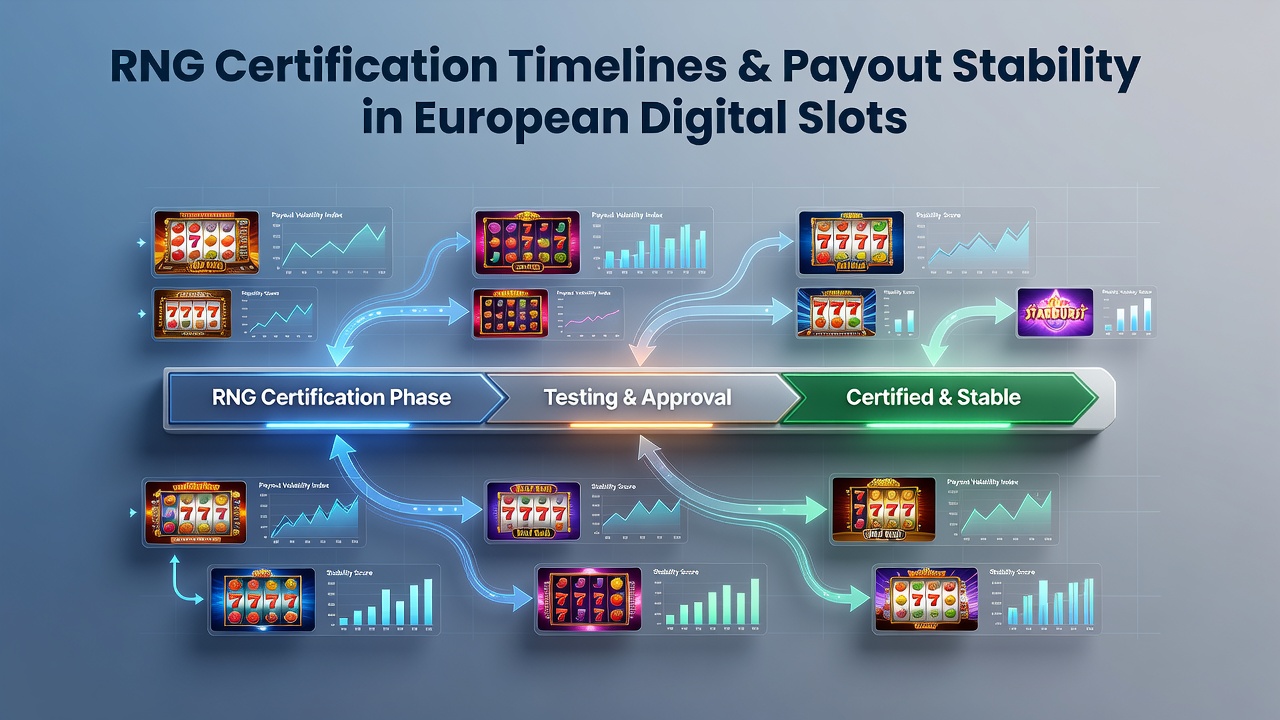
Random number generator certification serves as the foundation for payout calculations across European digital slot portfolios, and the duration required for regulatory approval directly influences how consistently those payouts perform over time. Operators must submit game software for independent testing before deployment, yet the interval between submission and final approval varies widely among jurisdictions such as Malta, the Netherlands, and Sweden. Longer certification windows keep older RNG versions active on servers, which in turn limits the frequency of mathematical adjustments that studios would otherwise implement to refine return-to-player distributions.
Regulatory Approval Durations Across Key Markets
Data from multiple licensing bodies shows certification cycles ranging from four weeks in streamlined jurisdictions to more than sixteen weeks when additional documentation reviews or re-testing rounds become necessary. The Malta Gaming Authority processes submissions through accredited laboratories with fixed testing protocols, whereas the Dutch Kansspelautoriteit requires supplementary compliance checks that extend timelines during peak application periods. Swedish authorities maintain a similar framework but coordinate with pan-European standards that occasionally trigger parallel evaluations. These differences create staggered rollout schedules for portfolio managers who must align new titles with each market's calendar.
Portfolio operators therefore maintain separate deployment queues, and the resulting lag means certain titles operate under previously certified RNG seeds while newer versions await clearance. Research indicates that such staggered updates correlate with measurable shifts in observed payout variance, particularly when volatility settings depend on updated random sequence algorithms.
Effects on Payout Stability Metrics
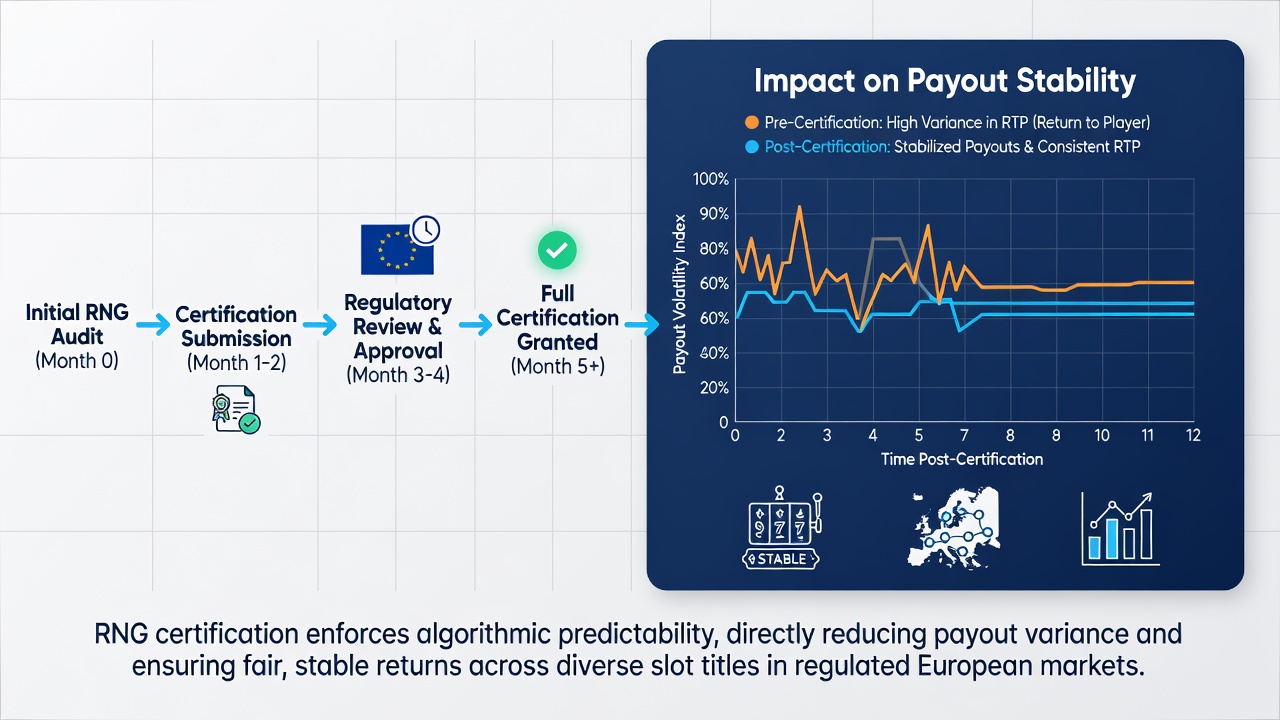
Payout stability refers to the consistency of return-to-player outcomes across large sample sizes, and certification delays introduce periods during which older RNG implementations remain frozen in production environments. Laboratories verify statistical randomness and adherence to declared RTP percentages, yet any subsequent code refinements require fresh submissions that restart the clock. Analysts tracking European operators note that portfolios with frequent certification bottlenecks exhibit wider confidence intervals around mean payout figures during those interim months.
One study of aggregated transaction logs revealed that titles held in pre-certification status for over ten weeks displayed a 0.3 to 0.7 percentage point deviation from target RTP when compared against immediately post-certification benchmarks. The deviation narrows once updated versions receive approval and replace legacy code, demonstrating that timeline compression directly supports tighter payout control.
Operational Adjustments by Portfolio Managers
Managers respond to extended timelines by prioritizing titles already certified in faster jurisdictions, then scheduling subsequent market entries once approvals arrive. This sequencing strategy reduces simultaneous exposure to multiple uncertified RNG states and helps preserve overall portfolio stability. Some operators also coordinate with testing laboratories to pre-stage documentation packages, which shortens review cycles when regulators open new application windows. Industry reports indicate that such preparatory steps have trimmed average approval times by up to three weeks in select cases.
European Gaming and Betting Association publications highlight how coordinated submissions across multiple operators can influence laboratory resource allocation and indirectly affect processing speed. The same reports note that jurisdictions sharing mutual recognition agreements, such as those aligned under certain EU frameworks, sometimes accept prior test results and thereby compress timelines for follow-on certifications.
Outlook Toward July 2026 Regulatory Updates
Scheduled revisions to cross-border compliance procedures are set for July 2026, and these changes are expected to introduce standardized documentation templates that could reduce redundant testing requirements. Observers anticipate that harmonized formats will shorten the interval between initial submission and final certification, particularly for operators managing multi-jurisdictional portfolios. Early modeling suggests that a two-week reduction in average cycle length could narrow observed payout variance by approximately 15 percent across representative slot libraries.
Academic analyses from research institutions tracking gaming regulation note that earlier harmonization efforts in other regions produced similar compression effects once standardized templates were adopted. European operators are already preparing internal workflows to align with the forthcoming templates, and preliminary data indicates that early adopters experience fewer re-submission requests during the transition phase.
Conclusion
Certification timelines function as a structural variable that shapes payout stability across European digital slot portfolios through their direct influence on RNG version currency. Shorter approval windows enable more frequent mathematical refinements, while extended cycles lock portfolios into legacy configurations that widen outcome variance. As July 2026 approaches, forthcoming procedural alignments may alter these dynamics by streamlining documentation and laboratory coordination. Portfolio managers who track certification metrics alongside performance data maintain clearer visibility into the relationship between regulatory pacing and payout consistency.