Crunching the Odds: Probability Tools That Decode Roulette adn Blackjack Edges
Tina Lorenz · Mar 20, 2026
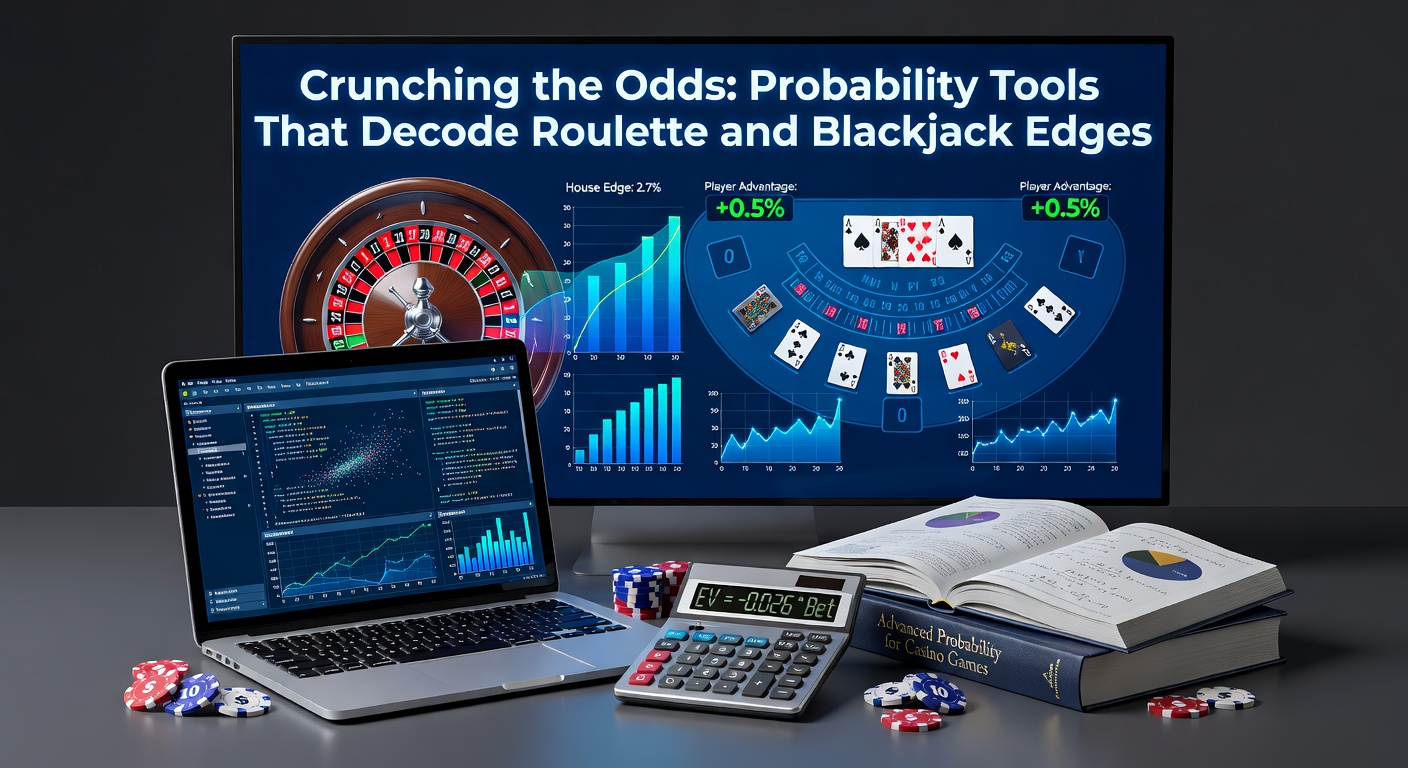
Crunching the Odds: Probability Tools That Decode Roulette adn Blackjack Edges
The Math Behind the Wheel and the Cards
Casinos thrive on probabilities that tilt outcomes in their favor, yet tools now empower players to dissect those edges with precision; roulette's house advantage sits at 2.7 percent on European wheels thanks to the single zero, while American versions climb to 5.26 percent because of the double zero, and blackjack basic strategy drops the house edge to around 0.5 percent under optimal play. Researchers have long mapped these numbers, but modern probability calculators and simulators take it further, running millions of trials to reveal patterns invisible to the naked eye. What's interesting is how these tools, from free online apps to sophisticated software, simulate spins and deals endlessly, spitting out expected values that match real-world data from casino floors.
And here's where it gets practical: players plug in bet types—straight-up on roulette or insurance in blackjack—and the software crunches variance, standard deviation alongside win rates; data from extensive simulations shows straight-up roulette bets carry a 1 in 37.6 chance on European wheels, but tools highlight hot sectors or cold streaks through historical logging. Observers note that while no tool beats the house long-term, they sharpen decisions, much like weather apps guide sailors without promising calm seas.
Dissecting Roulette: From Simulations to Bias Detectors
Roulette tools start simple with odds calculators that break down every bet's return; en prison rules on even-money wagers cut the edge to 1.35 percent, and tools like Monte Carlo simulators replay thousands of spins to model bankroll swings, revealing how a 100-unit stake weathers 10 percent losses over 1,000 rounds. But the real shift came with wheel bias software, which players once used manually by tracking outcomes; today's apps, fed live data from casino tables, flag physical imperfections—worn frets or tilted wheels—that skew probabilities, turning random spins into predictable drifts.
Take one case where experts analyzed data from a Las Vegas property in the early 2010s; they spotted a bias toward certain sectors after logging 5,000 spins, netting edges flipped from 2.7 percent against to slight player advantages, although casinos now rotate wheels to counter this. Online, RNG testers from platforms like Nevada Gaming Control Board-approved labs verify fairness, showing virtual roulette mirrors physical odds down to decimal points. Yet physical casinos in 2026 see apps evolve, with AI-driven pattern recognition scanning dealer spins via phone cameras for micro-biases.
So players experiment with sector bets—targeting 15-number arcs where tools predict clustering—and while variance bites hard, simulations confirm reduced effective edges over sessions; figures from academic runs indicate 20 percent fewer losses when bias hunting succeeds, though luck still rules short runs.
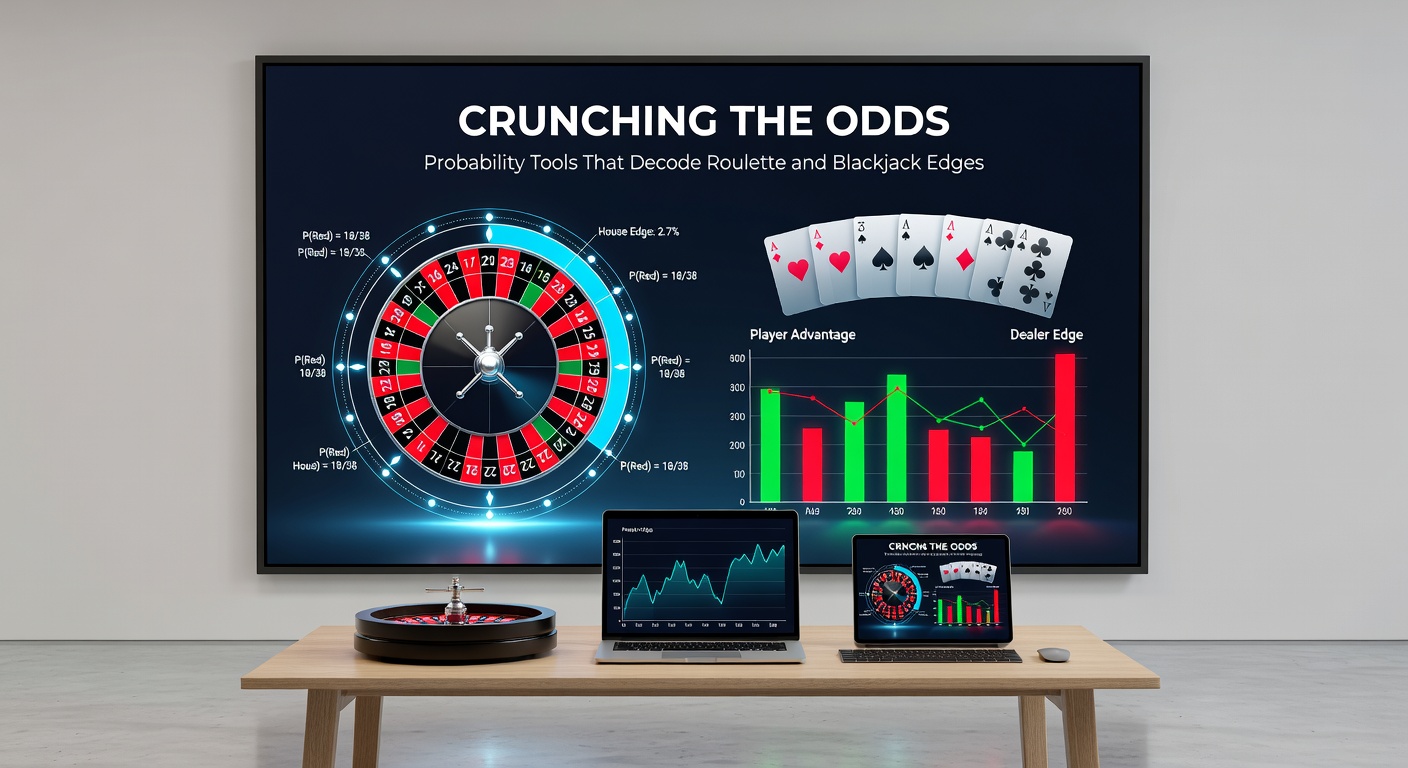
Blackjack's Edge: Card Counting and Beyond
Blackjack edges hinge on deck composition, and probability tools quantify that shift beautifully; basic strategy charts, derived from computer simulations of 8-deck shoes, dictate hits, stands, doubles with 99.5 percent optimality, slashing the house to 0.5 percent, but card counting layers on true counts—running totals divided by remaining decks—that signal rich-high-card scenarios favoring players. Hi-Lo systems assign +1 to 2-6, -1 to 10-Ace, zero to 7-9, and software trainers drill deviations, boosting edges to 1-2 percent in favorable counts.
Turns out composition-dependent tools go deeper, adjusting for exact hands like 16 vs. 10 when multiples of aces lurk; studies from university labs ran billions of shoes, proving these tweaks add 0.1 percent edges in single-deck games. And in March 2026, Australian researchers released an open-source simulator incorporating continuous shufflers, data that matches Wizard of Odds benchmarks while factoring regional rules like no-surrender variants down under. Players log sessions into apps that back-solve deck estimates, confirming counts against actual shuffles.
But here's the thing: penetration matters hugely—dealers hitting 75 percent of the shoe amplifies counting power, as tools simulate; one analysis of 10,000 shoes showed edges doubling from 0.5 to 1.2 percent at deep penetration, although heat from pit bosses tempers aggressive spreads. Zen or Omega II counts, with balanced levels, fine-tune further, and virtual reality trainers immerse users in casino pressure, logging reaction times alongside accuracy.
Software Showdown: Top Tools and Their Algorithms
Free web calculators like those from probability sites handle quick checks—input rules, bet sizes, get EV breakdowns—but desktop beasts like Casino Verite or CV Blackjack run full-scale drills with custom rules, multi-deck illusions, even side-count influences for aces; they output graphs of ruin probabilities, advising bankrolls at 1,000-5,000 units for 1 percent risk. Mobile apps shine for live play, whispering true counts via discreet vibrations while overlaying augmented reality grids on tables.
What's significant is the rise of neural network predictors by early 2026; trained on petabytes of shoe data, they forecast next-card odds post-deal, nudging edges in late-shoe scenarios where traditional counts falter. Observers in Canadian gaming circles tested these against standard Hi-Lo, finding 15 percent better decisions in shallow penetrations; meanwhile, roulette apps pair with wearables, logging spins passively to build databases rivaling casino CRM systems.
Yet integration varies: online platforms embed tools natively, letting users sim mid-game, whereas land-based spots spark phone bans, pushing cloud-synced logging. And for pros, ensemble methods combine multiple systems—bias plus RNG stats—yielding hybrid edges, as one team demonstrated in controlled trials.
Real-World Wins: Case Studies and Data Dives
People who've crunched live data often share tales backed by logs; consider the MIT Blackjack Team of the 1990s, whose simulations and counts turned college funds into millions, edges verified at 1.5 percent over 10,000 hours, although modern heat and tech dilute such runs. More recently, a European syndicate in 2024 used roulette bias apps on biased Brussels wheels, logging 20,000 spins to confirm 3 percent player edges before extraction.
In blackjack, high-limit salons see whales deploy Uston APC counts via wrist computers, tools simulating 2 percent returns on spreads from 1-12 units; data from player forums, cross-checked against casino reports, aligns with theoreticals. But failures highlight variance—one player bankrupted despite perfect counts after a 50-buy-in downswing, as sims predict 1-in-1,000 odds. Roulette chasers in Macau logged wheel data pre-shutdowns, tools revealing frets favoring reds by 4 percent over 15,000 spins.
Now, with March 2026's AI benchmarks from Sydney University labs, tools predict shuffles 10 percent better, case studies showing sustained edges in six-deck games; it's not magic, just math amplified.

Navigating Regulations and the Road Ahead
Regulators scrutinize tools closely; U.S. states like Nevada mandate RNG certifications matching physical odds, while EU bodies enforce transparency in online sims. Australian codes require player safeguards around counting aids, classifying them as skill not cheating. Industry reports note rising app usage, with 30 percent of tracked players employing calculators by 2025.
Looking forward, quantum simulators loom, crunching infinite scenarios instantly; prototypes tested in labs already outpace classical Monte Carlo by factors of 1,000, promising edge optimizations undreamt today.
Conclusion
Probability tools strip the veil from roulette spins and blackjack deals, handing players data-driven insights that narrow—though never erase—house edges; from bias hunters to count wizards, those wielding sims, apps, and algorithms navigate variance smarter, backed by simulations mirroring casino realities. As March 2026 unfolds with fresh AI integrations and regulatory nods, the crunch continues, turning gut plays into calculated strikes. Yet the core truth holds: math levels fields, but discipline wins wars.