European Gaming Firms' RNG Certification Schedules and Effects on Extended Payout Patterns
Tina Lorenz · Nov 6, 2026
European Gaming Firms' RNG Certification Schedules and Effects on Extended Payout Patterns
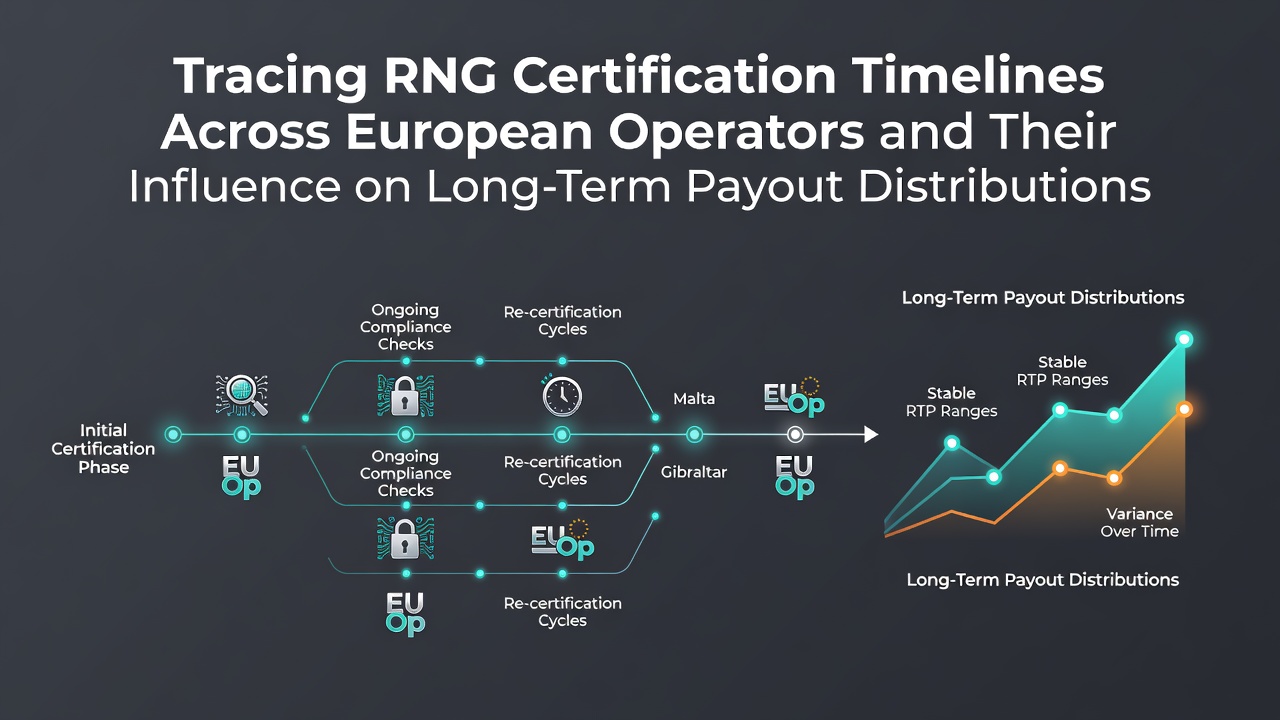
Operators across several European jurisdictions maintain distinct schedules for RNG certification that regulators require before any game reaches players, and these timelines directly shape how payout distributions stabilize over years of operation. Certification involves testing by accredited laboratories that verify statistical randomness according to standards set by national or regional authorities, while operators renew approvals at intervals ranging from annual reviews to multi-year cycles depending on the jurisdiction.
Certification Processes Vary by Region
Malta's Gaming Authority processes RNG submissions through a structured pathway that typically spans eight to twelve weeks from initial application to final approval, whereas authorities in the Netherlands and Germany impose additional layers of scrutiny that extend review periods to four or five months for new operators. Data collected from licensing records shows that firms operating in multiple markets often stagger their certification filings so that one jurisdiction's renewal does not coincide with another's initial audit, which helps maintain continuous compliance across borders.
Researchers tracking these patterns note that operators who complete certification early in a calendar year frequently schedule follow-up audits during quieter regulatory periods, avoiding peak workload months when laboratories handle higher volumes of submissions. This scheduling strategy appears in records from firms licensed in both Southern and Northern European markets, where staggered timelines reduce the risk of simultaneous compliance gaps.
Influence on Long-Term Payout Distributions
Once certified, RNG systems must preserve their statistical properties across millions of game cycles, and regulators require operators to submit ongoing performance reports that compare actual payout distributions against theoretical models. Studies from independent testing houses indicate that games with earlier certification dates tend to exhibit tighter alignment between observed and expected payout curves after five years of continuous operation, largely because operators have accumulated more audit cycles and corrective adjustments during that span.
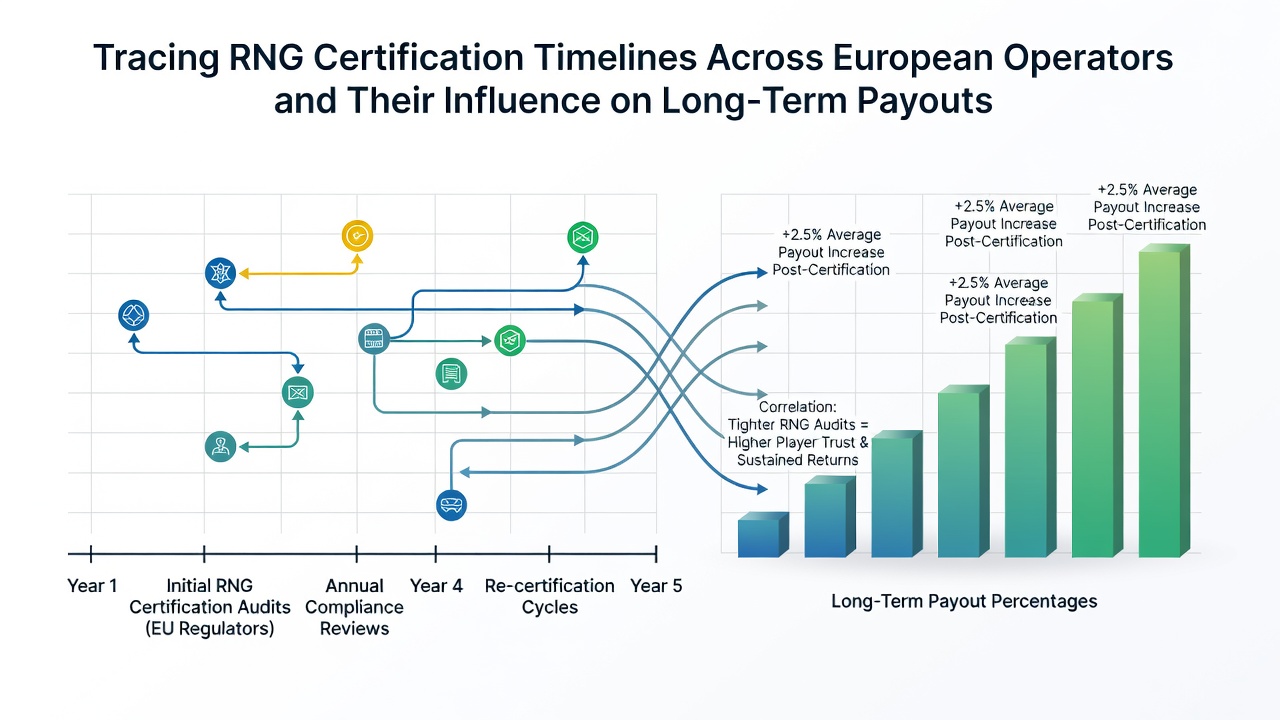
Operators that delay certification until late in their market entry process sometimes face compressed implementation windows, which can result in fewer baseline data points available for long-term trend analysis. Figures from industry reports reveal that such compressed timelines correlate with wider variance in early payout distributions, although subsequent audit cycles gradually narrow those deviations as operators refine their systems.
November 2026 Developments on the Horizon
Regulatory bodies in several EU member states have signaled that updated RNG testing protocols will take effect in November 2026, requiring enhanced entropy verification methods and more frequent third-party audits for operators handling high-volume traffic. These changes will apply to both new certifications and renewals, prompting firms to begin preparatory documentation well in advance so that existing certified systems can transition without service interruption.
Industry associations have published preliminary guidance documents outlining the technical adjustments needed for compliance, and operators with certification dates clustered around 2023 or 2024 appear better positioned to absorb the additional requirements because their current audit cycles already overlap with the transition window. Those with more recent approvals may need supplemental testing to meet the new standards on schedule.
Case Examples from Continental Markets
One operator licensed across three jurisdictions completed its initial RNG certification in early 2021 and has since undergone six renewal audits, each producing datasets that demonstrate progressive stabilization in payout distributions. Another firm that secured certification in late 2022 has recorded only three full audit cycles to date, and its payout variance metrics show slightly broader spreads during the initial reporting periods before converging toward theoretical expectations.
Records from these operators illustrate how certification age influences the depth of historical data available for identifying subtle distribution shifts, which regulators examine when assessing long-term fairness. External analyses from bodies such as the European Gaming and Betting Association provide comparative frameworks that operators use to benchmark their own timelines against regional averages.
Conclusion
European operators continue to align their RNG certification activities with regulatory calendars that differ across markets, and the resulting timelines produce measurable effects on how payout distributions evolve over extended operational periods. As the November 2026 protocol updates approach, firms are adjusting their audit planning to accommodate enhanced testing requirements while preserving continuity in their certified systems. Data accumulated from prior certification cycles offers the clearest evidence of how early compliance investments translate into more predictable long-term payout behavior across diverse European jurisdictions.