Layered Simulations Decode Shuffle Sequence Effects on Texas Hold'em Probabilities
Freya Roth · Jun 19, 2026
Layered Simulations Decode Shuffle Sequence Effects on Texas Hold'em Probabilities
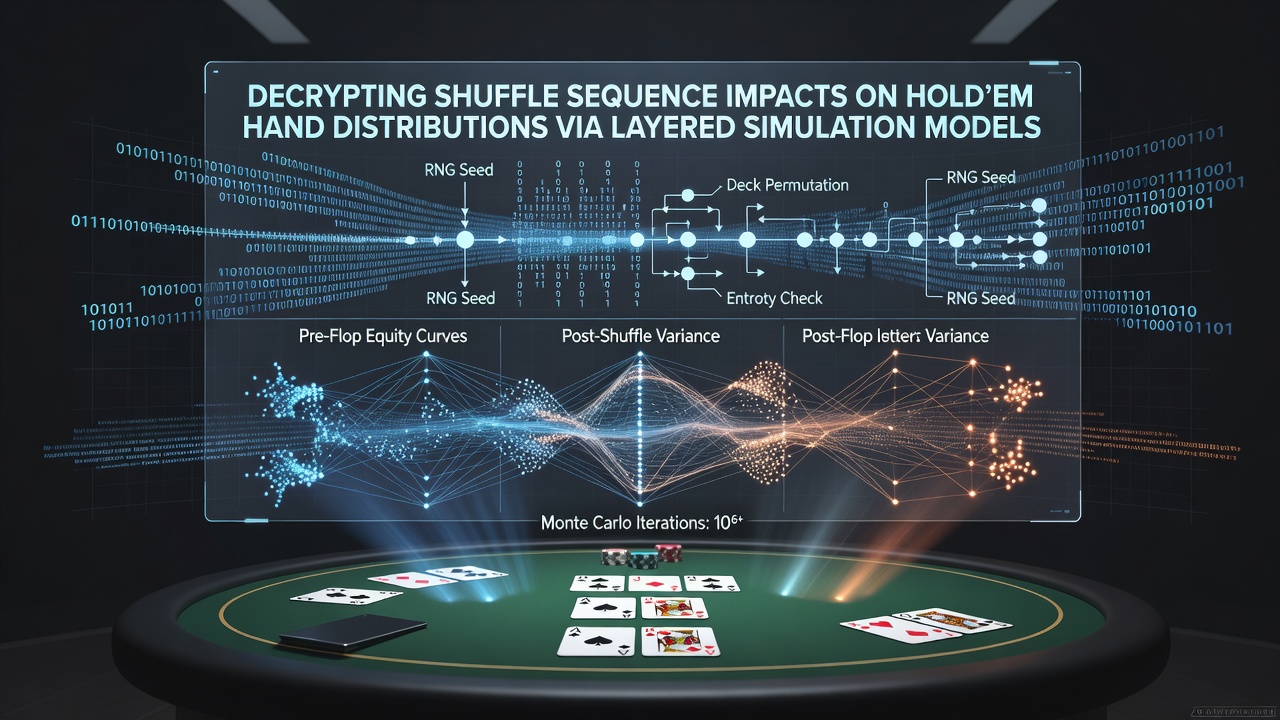
Texas Hold'em hand distributions shift when shuffle sequences deviate from ideal randomness, and layered simulation models provide structured ways to measure those shifts. Researchers apply these models to break down shuffling processes into multiple computational layers that isolate sequence patterns, deck ordering effects, and resulting card combinations across large numbers of simulated deals.
Core Components of Shuffle Sequence Analysis
Standard deck shuffles rely on algorithms that reorder 52 cards through repeated operations such as riffles, cuts, and interleaves. When sequences follow predictable patterns instead of uniform randomness, certain hands appear more or less frequently than theoretical probabilities predict. Layered models address this by stacking simulation stages where the first layer generates base shuffle outputs, the second layer applies statistical filters to detect biases, and deeper layers run Monte Carlo iterations to quantify distribution changes.
Data from these layered approaches show that even minor sequence repetitions alter flush and straight frequencies by measurable margins. Observers note that tracking sequence entropy across layers reveals how initial ordering constraints propagate through multiple deals, creating clusters of correlated hands rather than independent outcomes.
Implementation of Layered Models in Practice
Teams constructing these models divide the simulation into sequential modules that handle distinct variables. One module recreates physical or digital shuffle mechanics while another tracks position-specific card assignments to players. Additional layers incorporate hold'em rules such as community card reveals and betting round structures, allowing researchers to map how early sequence effects influence final hand strengths.
Those who have studied this process find that increasing layer depth improves detection of subtle anomalies that single-stage simulations often miss. For instance, a model with five layers can separate the impact of a single imperfect riffle from cumulative effects across an entire session, whereas simpler models blend these signals together.
Observed Distribution Shifts and Measurement Techniques
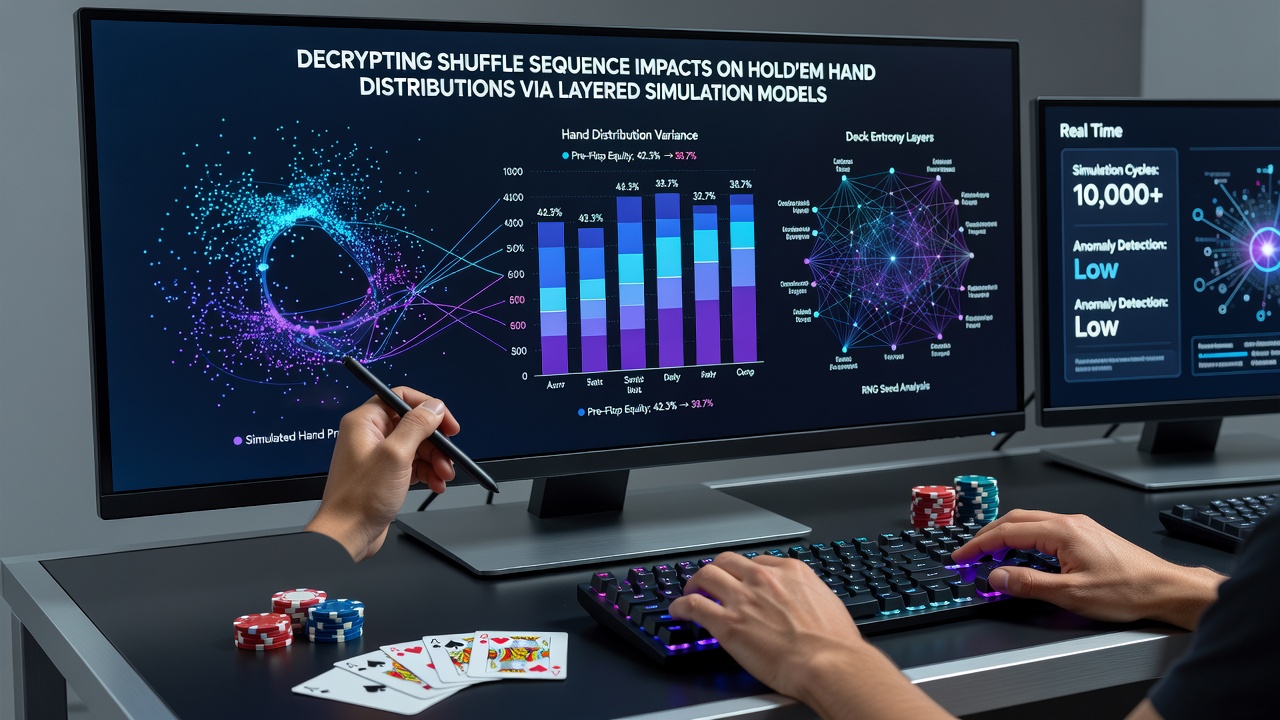
Simulations consistently demonstrate that biased shuffle sequences increase the occurrence of paired hands in early positions while reducing suited connector frequencies in later seats. Researchers measure these shifts through metrics including hand-type variance, positional equity deviation, and sequence autocorrelation scores. Each layered run produces datasets that statistical tools then compare against baseline uniform distributions derived from exhaustive enumeration of all possible deals.
Evidence suggests that sequence length plays a critical role. Shorter sequences tied to automated shufflers produce tighter clustering around specific hand types, whereas extended sequences from manual procedures generate broader but still non-uniform spreads. Analysts apply chi-square tests and entropy calculations at each model layer to confirm where deviations cross significance thresholds.
Developments Scheduled for June 2026
Industry reports indicate that several research groups plan to release updated simulation frameworks in June 2026 that incorporate real-time sequence logging from live dealer systems. These frameworks will add an adaptive layer capable of recalibrating bias estimates during ongoing sessions rather than relying solely on post-session analysis. The Nevada Gaming Control Board has referenced similar modeling requirements in recent technical bulletins, and parallel work from Canadian academic institutions is expected to provide comparative datasets across different regulatory environments.
Conclusion
Layered simulation models continue to supply precise tools for examining how shuffle sequences influence Texas Hold'em hand distributions. By isolating sequence effects through successive computational stages, these approaches generate quantifiable data on probability shifts that single-method analyses cannot capture. As modeling techniques advance, the resulting insights support more accurate assessments of game integrity across both digital and physical poker environments.