Peak Season Traffic Prompts Poker Networks to Recalibrate Rake Formulas Through Session Yield Analysis
Zara Schröder · Jun 14, 2026

Peak Season Traffic Prompts Poker Networks to Recalibrate Rake Formulas Through Session Yield Analysis
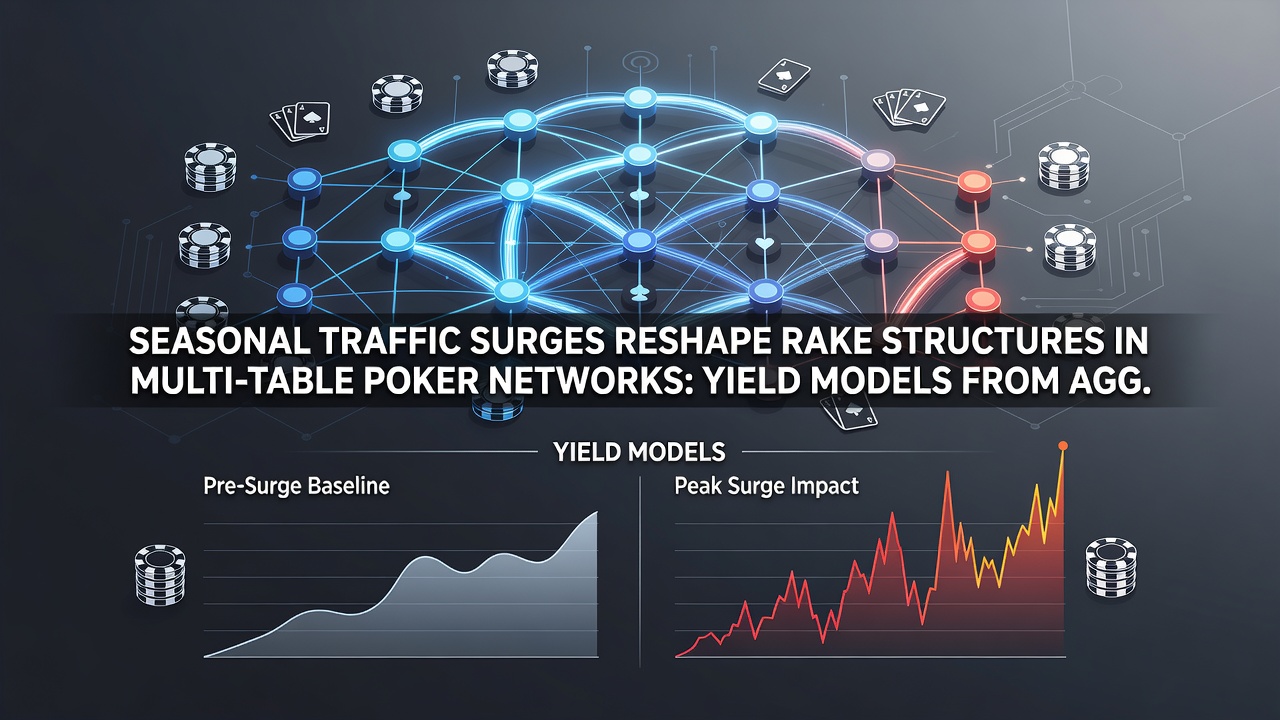
Multi-table poker networks experience pronounced traffic increases during holiday periods and major tournament calendars, and operators respond by modifying rake structures to maintain consistent yields from aggregated player sessions. Data compiled across several platforms indicates that player volume can rise between 35 and 60 percent during December peaks and late-spring festival windows, prompting adjustments in both cash-game rake caps and tournament fee percentages.
Yield models built from millions of anonymized sessions reveal that standard rake percentages often fail to capture optimal revenue when tables fill faster and average session lengths shorten. Networks therefore introduce dynamic caps or tiered fee schedules that activate once concurrent player counts exceed defined thresholds. These changes appear most frequently on mid-stakes multi-table tournaments where entry volumes surge while individual player retention remains variable.
Data Patterns Behind Seasonal Adjustments
Researchers examining session-level metrics have documented how increased table density alters effective rake per hand. When more players join during evening rush periods, average pot sizes grow yet hands per hour at each table can decline because of longer decision times. Models that incorporate both factors show that uncapped percentage rake begins to underperform once traffic exceeds 120 percent of baseline levels, leading platforms to test hybrid structures that combine a percentage fee with a hard cap adjusted seasonally.
One study covering North American and European networks found that rake yields stabilized when caps rose by 15 to 25 percent during identified high-traffic months. The same analysis indicated that lowering the cap during quieter summer stretches preserved player participation without measurable revenue loss. Operators monitor these thresholds through rolling seven-day averages rather than fixed calendar dates, allowing rapid response to unexpected spikes such as those triggered by large satellite events.
Implementation Across Major Platforms
Networks have adopted several approaches to seasonal rake management. Some apply automatic multipliers to existing caps once aggregated concurrent users surpass preset benchmarks, while others publish separate fee tables for holiday periods that players can review in advance. Both methods rely on the same underlying yield calculations derived from historical session data, yet they differ in transparency and player communication strategies.
Canadian operators regulated by iGaming Ontario have published aggregated reports showing that adjusted rake schedules during March and April tournament seasons produced yield increases of roughly 8 percent compared with static structures from prior years. Similar patterns appear in Australian market data released through state gaming authorities, where platforms reported steadier revenue curves after introducing traffic-triggered cap changes ahead of the 2025–2026 summer festival period.
Yield Modeling Techniques
Analysts construct yield models by merging hand-level rake collection figures with session duration and player-count variables. Regression techniques isolate the impact of traffic surges from other factors such as game type or stake level. The resulting equations allow networks to simulate outcomes under different cap scenarios before deployment, reducing the risk of revenue volatility or player migration.
Additional variables include average stack depth and tournament duration, both of which shift during high-traffic windows when recreational players enter at higher rates. Models that weight these elements produce more accurate forecasts for June 2026 events, when several major series are scheduled to overlap with traditional summer holiday traffic. Platforms using these forecasts have begun publishing provisional rake tables for that period, giving regulars time to adjust bankroll planning.
Observers note that successful implementations maintain a balance between revenue optimization and game accessibility. Excessively aggressive cap increases during peaks have correlated with reduced table occupancy in subsequent weeks, whereas modest adjustments tied directly to measured volume show stronger retention. Networks therefore refine their models continuously, feeding new session data back into the algorithms each month.
Conclusion
Seasonal traffic patterns continue to shape rake structures across multi-table poker networks, with operators relying on aggregated session data to calibrate yield outcomes. Adjustments implemented through dynamic caps and tiered fees have demonstrated measurable effects on revenue stability, particularly when synchronized with projected peaks such as those anticipated for June 2026. Ongoing refinement of these models supports consistent platform performance while accommodating fluctuations in player volume and behavior.