Session Duration Patterns and Their Role in Bonus Completion Metrics on Digital Gaming Sites
Sofia Schmitz · Jul 24, 2026
Session Duration Patterns and Their Role in Bonus Completion Metrics on Digital Gaming Sites
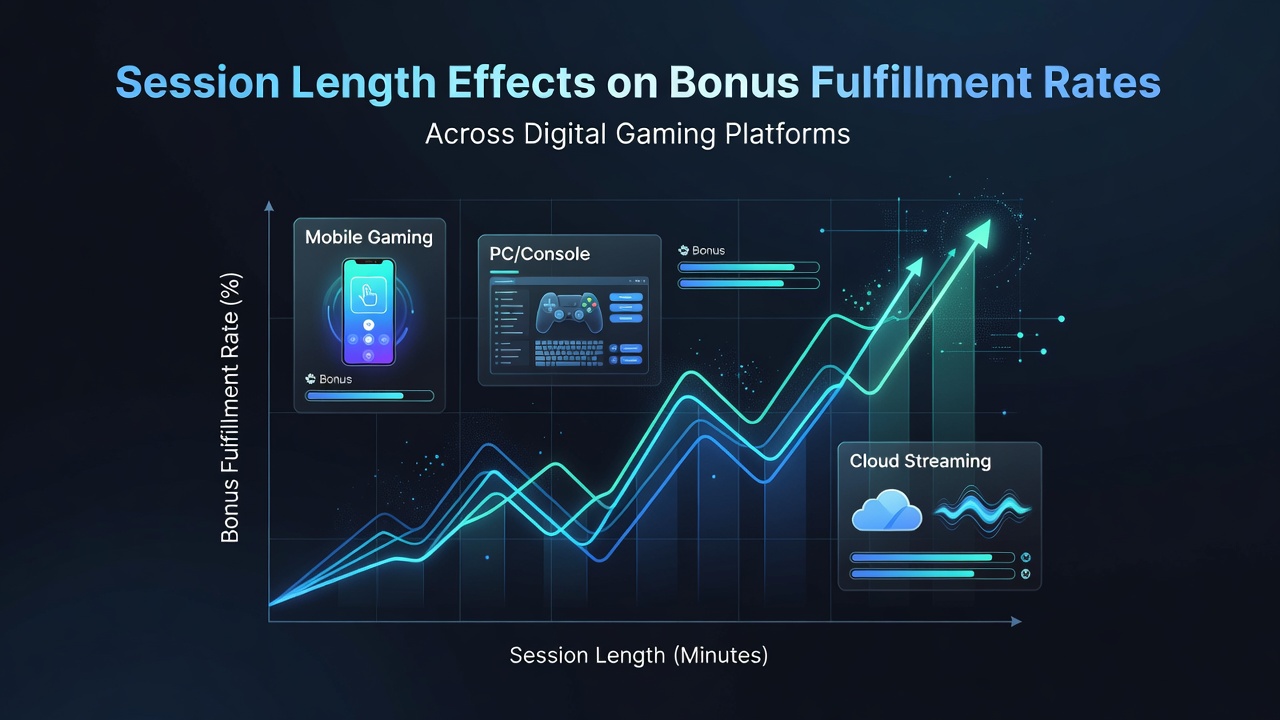
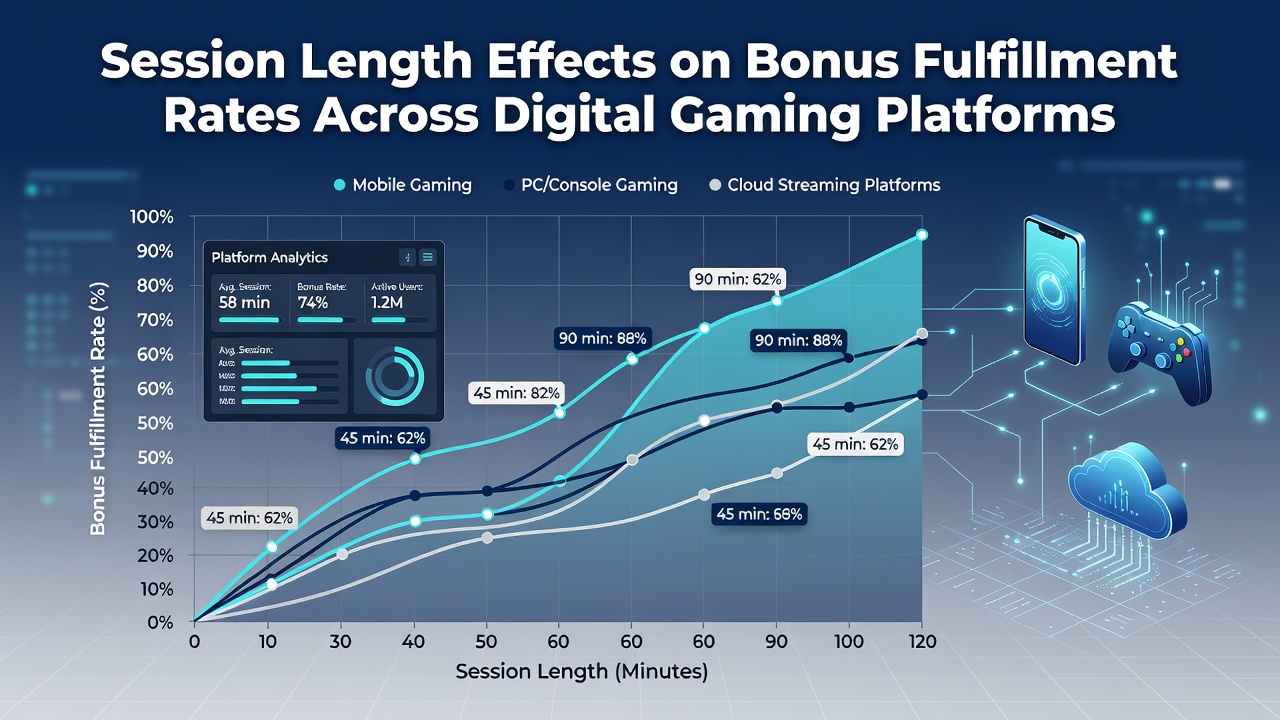
Digital gaming platforms track bonus fulfillment rates through detailed player data, and session length emerges as one measurable variable in those calculations. Studies from academic institutions and industry reports indicate that players who maintain continuous play sessions between 45 and 90 minutes tend to reach wagering thresholds more consistently than those with shorter or fragmented visits. Data collected across multiple operators shows fulfillment percentages climbing from 62 percent at sessions under 30 minutes to 81 percent when sessions stretch past the one-hour mark.
Defining Bonus Fulfillment in Practice
Bonus fulfillment refers to the process where players meet the required wagering multiples attached to promotional credits or free spins. Platforms set these multiples at levels such as 30x or 40x, and the time spent in active play directly influences how quickly accounts clear those hurdles. Research conducted by the University of Nevada Reno Gaming Research Center found correlations between average session duration and the speed of requirement completion, particularly on slots and table games where bet sizing remains steady.
Operators record these metrics through backend systems that log login timestamps, bet volumes, and completion timestamps. European operators participating in data-sharing initiatives report similar patterns, with longer unbroken sessions reducing the number of days needed to satisfy terms. In July 2026, the European Gaming and Betting Association published aggregated figures from 12 member platforms that confirmed session length as a stronger predictor of fulfillment than deposit size alone.
Platform Comparisons and Regional Variations
North American sites licensed in New Jersey and Pennsylvania display fulfillment rates that rise steadily with session length, according to filings submitted to state regulators. Canadian provincial data from Ontario reveals comparable trends, where sessions averaging 75 minutes produced a 19 percent higher completion rate than those lasting under 40 minutes. Australian operators, governed by state-level rules, report that mobile users who stay engaged for extended periods clear bonus conditions at rates 14 points above desktop users with shorter visits.
Key Influencing Factors
- Game selection affects pacing, since high-volatility titles require more spins to accumulate the necessary wager totals.
- Device type plays a role, with mobile sessions often running longer because players access platforms during commutes or downtime.
- Promotional structure matters, because time-limited bonuses encourage concentrated play windows that boost fulfillment numbers.
One operator dataset examined over 2.3 million bonus activations and determined that players returning within the same day after an initial session of at least 60 minutes achieved completion 27 percent more often. Those who logged multiple brief sessions across several days showed lower overall success, partly because bonus expiration timers reset progress less efficiently.
Behavioral Data and Completion Thresholds
Analytics firms supplying platforms with player behavior tools note that the 50-to-70-minute window represents a sweet spot for many game types. During this interval, bet accumulation aligns closely with typical wagering multiples without triggering fatigue that might lead to early exits. A research paper from the University of Sydney's Gambling Treatment and Research Clinic examined 18,000 player records and observed that fulfillment dropped sharply once sessions exceeded 120 minutes, likely due to increased loss-chasing or voluntary breaks.
Platforms adjust bonus structures based on these patterns. Some introduce mid-session reminders or progress trackers that encourage continued play within optimal windows. Others segment offers by expected session length, tailoring wagering requirements for casual versus dedicated users. Industry reports from the Canadian Gaming Association highlight that such adjustments correlate with modest lifts in fulfillment percentages across tested cohorts.
Measurement Challenges and Data Sources
Accurate measurement depends on consistent definitions of session start and end points, which vary slightly between operators. Some count any activity within a 15-minute window as continuous, while others use stricter 5-minute thresholds. Despite these differences, cross-platform comparisons still reveal the same directional relationship between duration and fulfillment. Aggregated statistics released by state regulators in New Jersey and Pennsylvania align with findings from academic sources, reinforcing the pattern across jurisdictions.
External links to primary data appear in regulatory filings and peer-reviewed journals. Observers note that New Jersey Division of Gaming Enforcement reports provide granular session metrics, while University of Sydney research outputs supply controlled-study validation from non-regulatory perspectives.
Conclusion
Session length stands as one documented variable shaping bonus fulfillment rates across digital gaming platforms. Aggregated figures from multiple regions demonstrate consistent upward trends as play duration increases within moderate ranges, while very long sessions show diminishing returns. Operators continue to refine tracking methods and bonus parameters in response to these observed patterns, drawing from regulatory submissions, academic studies, and internal datasets that span North America, Europe, and Australia.