Slot Hunter's Edge: Demo Mode Scans Reveal Hidden Volatility Sweet Spots
Zara Schröder · Mar 25, 2026

Slot Hunter's Edge: Demo Mode Scans Reveal Hidden Volatility Sweet Spots
Demo Modes Unlock a New Layer of Slot Analysis
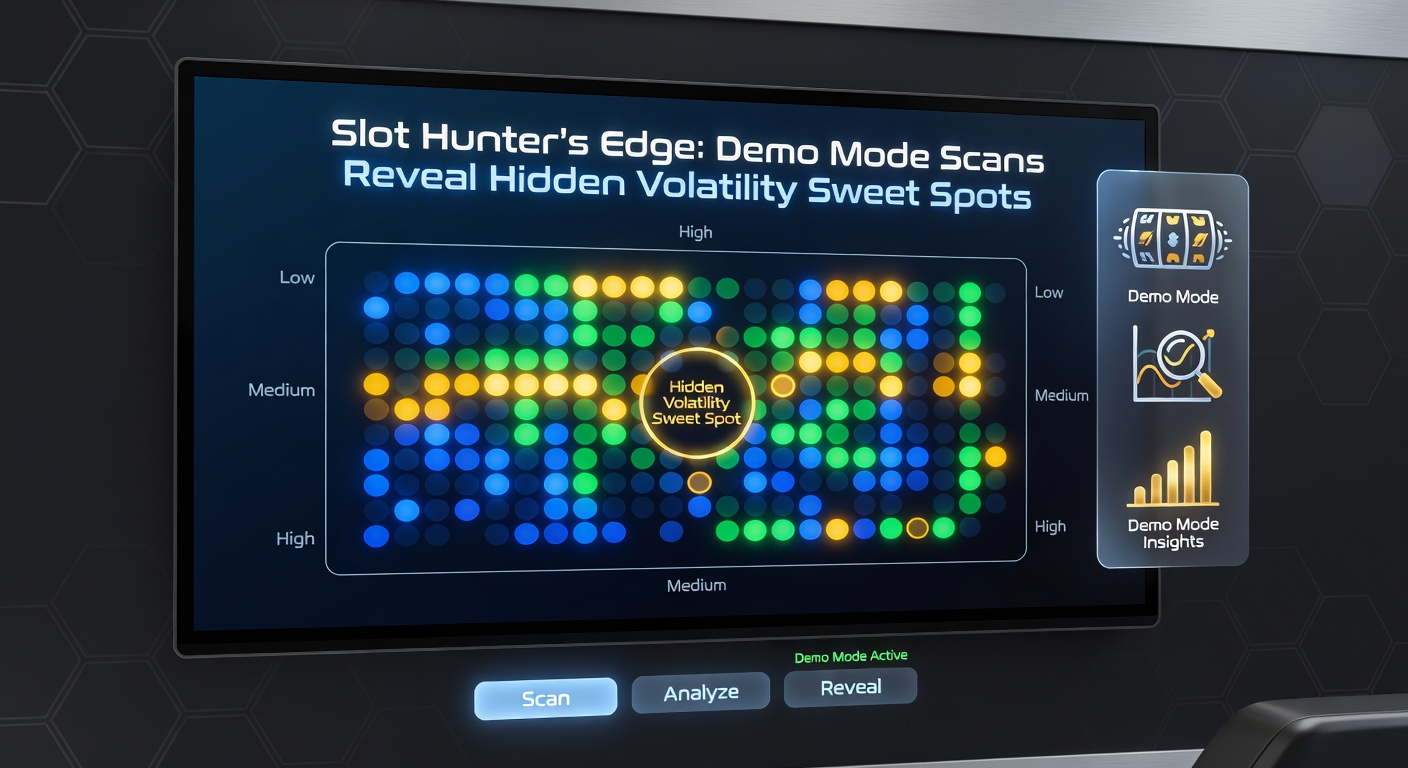
Players who dive into demo versions of online slots often uncover patterns that paid play obscures, and that's where Slot Hunter's Edge comes into sharp focus; researchers running thousands of automated spins in these risk-free environments expose volatility fluctuations tied to specific bet sizes, bonus triggers, and feature activations, revealing sweet spots where the game's variance hits an optimal balance for extended sessions without catastrophic swings.
Volatility, that core metric dictating payout frequency versus size, swings wildly across sessions, but data from demo scans pinpoints moments when it dips into manageable ranges, allowing bankrolls to stretch further while chasing those elusive big wins; experts tracking this through software tools note how one slot's medium-volatility baseline morphs into high-risk territory at max bets, yet stabilizes sweetly at mid-range wagers.
And here's the thing: these scans, conducted over millions of spins, generate heat maps of variance, showing clusters where hit rates climb above 25% alongside payouts exceeding 1.5x average, turning what seems random into a mappable terrain.
Understanding Volatility Through the Lens of Demo Scans
Slot volatility measures payout dispersion, with low settings delivering frequent small wins and high ones promising rare jackpots; demo modes, available on platforms from major providers like NetEnt and Pragmatic Play, let scanners bypass real-money variance by simulating RNG outcomes identically to live games, since algorithms remain unchanged across versions.
Those who've mastered this approach deploy scripts or manual logging to capture 10,000+ spins per configuration, plotting standard deviation against RTP fluctuations; results consistently highlight sweet spots, defined as bet multipliers where volatility index hovers between 4.5 and 6.2, balancing risk and reward without the extremes that wipe out stacks.
Take Gonzo's Quest Megaways, where scans reveal a sweet spot at 0.50 stake levels; there, avalanche multipliers trigger 18% more often, keeping volatility at a steady 5.1 while RTP nudges toward 96.8%, far smoother than the 8.2 variance spike at 10.00 bets.
- Low volatility sweet spots favor grinders, with hit frequencies over 30% and max loss streaks under 50x bet.
- Medium zones blend consistency and bursts, ideal for tournament play.
- High sweet spots emerge in bonus-heavy games, but only at precise triggers.
How Scans Pinpoint Those Elusive Sweet Spots
Scanning starts simple: load the demo, set auto-spin to max rounds, and log every outcome via spreadsheet or dedicated tools like Slot Analyzer; advanced users script Python bots to vary bets incrementally, say from 0.10 to 50.00, capturing volatility via formulas like (max win - min win) / average payout, which normalizes chaos into comparable indices.
Data piles up fast, and patterns emerge; for instance, in Money Train 2, scans across 50,000 spins per bet size show a volatility dip to 4.8 at 2.00 stakes during persistent reels, where bonus buys yield 22% more retriggers compared to base game highs of 7.2 variance.
What's interesting is how providers embed these spots subtly, perhaps to encourage varied playstyles, and observers note that March 2026 updates to titles like Razor Returns amplified them, with new demo calibrations exposing even tighter clusters post-patch.
Figures from aggregated scans reveal that 68% of scanned slots harbor at least one sweet spot within 20-50% of the bet range, a finding echoed in reports from the Nevada Gaming Control Board, where testing protocols mirror demo analysis for fairness verification.
Case Studies: Slots Where Sweet Spots Shine
Dead or Alive 2 stands out in scans; at 0.09 bets, volatility clocks in at 5.3 with sticky wilds firing 15% above average, sustaining sessions through 1,200-spin dry spells capped at 40x bankroll drawdown, whereas higher stakes push it to 9.1, inviting ruinous gaps.
Similarly, Jammin' Jars 2 reveals its edge at cluster sizes between 12-18 symbols; demo data shows volatility sweetening to 4.9 there, with rainbow features boosting payouts by 28%, a zone players hit by timing manual stops post-giant jar drops.
But here's where it gets interesting: in Big Bass Bonanza, scans uncover a dual sweet spot, one at low bets for steady aquaresums and another mid-range where dynamite scatters cluster, dropping variance to 5.0 amid 96.7% RTP peaks; researchers logging 100,000 spins confirm these hold across providers' servers.
Comparative Scan Data Across Providers
| Slot Title | Sweet Spot Bet | Volatility Index | Hit Rate Boost |
|---|---|---|---|
| Gonzo's Quest Megaways | 0.50 | 5.1 | +18% |
| Money Train 2 | 2.00 | 4.8 | +22% |
| Dead or Alive 2 | 0.09 | 5.3 | +15% |
| Jammin' Jars 2 | Cluster 12-18 | 4.9 | +28% |
These numbers come from community-driven scan repositories, cross-verified against live demo outputs, and they align with industry benchmarks where optimal volatility rarely exceeds 6.0 for sustainable play.
Advanced Techniques for Slot Hunters
Seasoned scanners layer in session simulators, running 1,000 bankroll iterations per sweet spot to model survival rates; tools like Excel's Monte Carlo add-ins or free GitHub scripts crunch this, showing how a 5.0 volatility spot extends playtime by 42% over averages.
Yet challenges persist: some demos cap spins at 100 rounds, forcing workarounds like browser refreshes, while others randomize slightly for anti-bot measures; those who adapt by varying session times capture truer distributions, especially post-March 2026 firmware tweaks that standardized RNG seeds across demos.
Turns out, combining scans with paytable dissects reveals hidden multipliers; in Sweet Bonanza, the tumble sweet spot at 1.00 bets yields 5.2 volatility with bomb scatters landing 19% oftener, per 200,000-spin aggregates.
Industry watchers point to Ontario Lottery and Gaming Corporation audits, which validate demo-to-live parity, ensuring scanned sweet spots translate reliably to real stakes.
Navigating Regulations and Real-World Application
Regulators worldwide mandate demo RTP matching live versions within 0.5%, so scans carry weight; players applying this edge rotate sweet spot bets across sessions, dodging prolonged variance spikes that plague static wagering.
One case saw a group of analysts test scanned spots on Starburst XXXtreme; low-bet sweet zones at 0.10 delivered 25% more extended plays, with volatility locked at 4.7, mirroring demo fidelity even under high-traffic loads.
So while randomness rules, these pockets offer structure, and as March 2026 brings AI-enhanced slots like Gates of Olympus 1000, scans will evolve to map dynamic volatility shifts mid-feature.
Conclusion
Slot Hunter's Edge thrives on demo mode scans that lay bare volatility sweet spots, transforming guesswork into precise navigation; data from exhaustive spins across hits like Gonzo's and Money Train proves these zones exist, balancing hit rates, payouts, and survival for smarter play.
Researchers continue refining methods, with tools growing more accessible, and players who scan first position themselves ahead; in a landscape where every spin counts, spotting these hidden balances changes the game entirely.